Driving the NSU Ro80
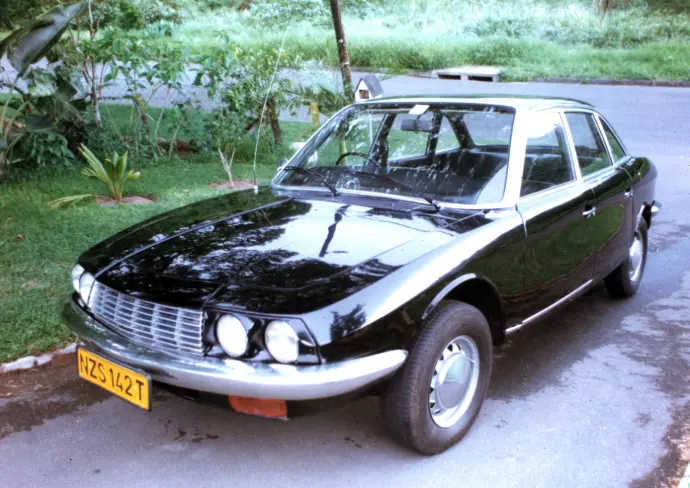
I had the adventure for a few years of owning and driving this iconic car.
Driving the NSU Ro80
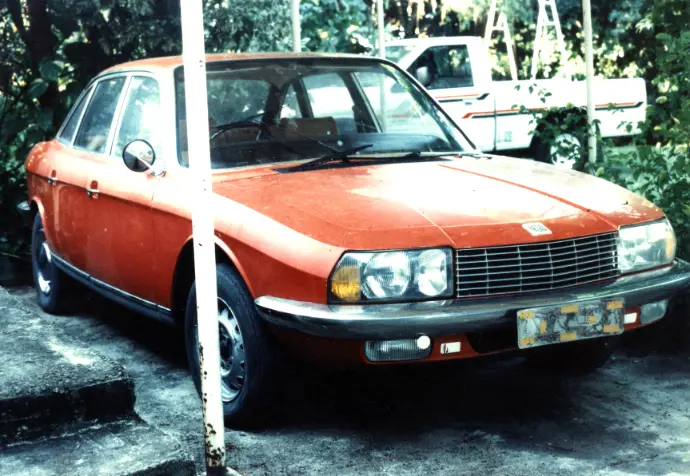
My friend Russ had a magnificent obsession for this iconic vehicle. When he and wife Jill moved to USA in 1995 I found myself the delighted owner of the car that you see here, as well as many spares and an additional non-running car. A little while later I also took over a third NSU which Russ had converted to a coupe. That deserves a page of its own to be published soon.
I will publish some historical details and specifications but first let me tell you what it was like to drive. The seats are large and soft and when you seat yourself in the front you are aware of the enormous cabin space. The windscreen is huge so there is a panoramic view. It is a 1969 models o it does have some elements which feel like the 70's car with unsophisticated vinyl dashboard with fairly primitive looking controls but there is a simplicity and elegance as well. It all looks functional.
The car was already 26 years old but I was very excited to drive it and for the next few years it enlivened my driving experience.
The rotary engine
The most revolutionary aspect of this innovative vehicle was in the drive train. When you switched n the ignition and fired it up there was a high pitched whine as the starter motor spun into action. If you lucky on the day the Wankel rotary engine would fire with a popping sound and a belch of smoke which would soon clear. Then the freely revving engine was eager to begin. The gearbox was manual with three forward gears but there was nothing normal about the clutch. For a start there was no clutch. On the gearstick there was a knob which engaged a hydraulic clutch. With an asthmatic hiss the clutch would engage if you touched it so you quickly learned not to drive with your hand near the gearstick.! As well as the semi-automatic clutch there was a torque converter which enabled a very smooth and gradual start from any gear. You very seldom needed first gear and could do most cruising in second gear.
The only drawback was starting the engine. With a deep breath to focus I would turn the ignition key and wait while the starter motor turned the engine faster and faster for agonising seconds until with a bit of luck there would be a popping sound, a belch of black smoke and then the engine would fire smoothly with a free-revving whine. This was not a muscular burble like a V8 but it could rev to more than 3000 rpm with no perceptible upper limit.
I developed a well practiced drill when the engine stalled. Its single spark plug would likely be coated with oil and would not start. So I would leap out the car with an ever-ready plug spanner and take out the spark plug, juggling the hot plug in one hand and then unplugging the fuel line with the other hand so that I could clean the plug with petrol. Then, after replacing the plug, I would try again. I remember when the engine stalled right in the middle of a very busy intersection on Argyle Road in Durban all motorists stopped and stared in fascination. Not one of them hooted or shouted while they waited and watched the pantomime.
Fortunately I mostly had a backup vehicle so it was always a question of choice for the trip but I used to enjoy the attention and speculation when I went out for a drive, so I indulged myself often.
But as I mentioned previously I did have a wake-up call when I stretched her legs and pushed the old girl to 100 mph (160 kph) on the freeway. She uncannily became quieter, smooth and silent and my sons in the back seat without seat belts also became quiet which induced me to remember that the spinning parts in the vehicle were 30 years old. I slowed down!
Technical Note: The NSU Ro80
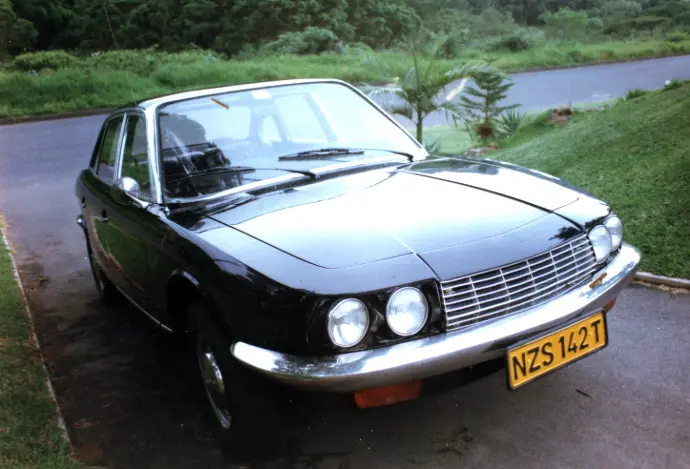
The NSU Ro80 was produced in Germany from 1967 to 1977 and was one of the most advanced saloon cars of its era. Designed by Claus Luthe, it combined futuristic aerodynamic styling with front-wheel drive, four-wheel independent suspension, power-assisted rack-and-pinion steering and four-wheel disc brakes.
Its most remarkable feature was its twin-rotor Wankel rotary engine. Instead of pistons moving up and down, the engine used two rotating triangular rotors inside specially shaped housings. This gave the Ro80 an unusually smooth, turbine-like character.
The engine produced around 115 hp and was paired with a three-speed semi-automatic transmission. There was no clutch pedal; touching the gear lever activated a vacuum-operated clutch system, while a torque converter helped the car pull away smoothly.
The Ro80 was named European Car of the Year in 1968 and is now regarded as one of the great “cars of the future” that arrived slightly too early. Early engines suffered from apex seal problems, damaging the car’s reputation and contributing to NSU’s financial difficulties. By around the 1970 model year many reliability issues had been improved, but the damage to public confidence had already been done.
Today the NSU Ro80 is remembered as a brave, elegant and visionary motor car — a machine that showed where automotive design was heading long before most manufacturers caught up.