Driving a Bread Bin
Owning the iconic Kombi
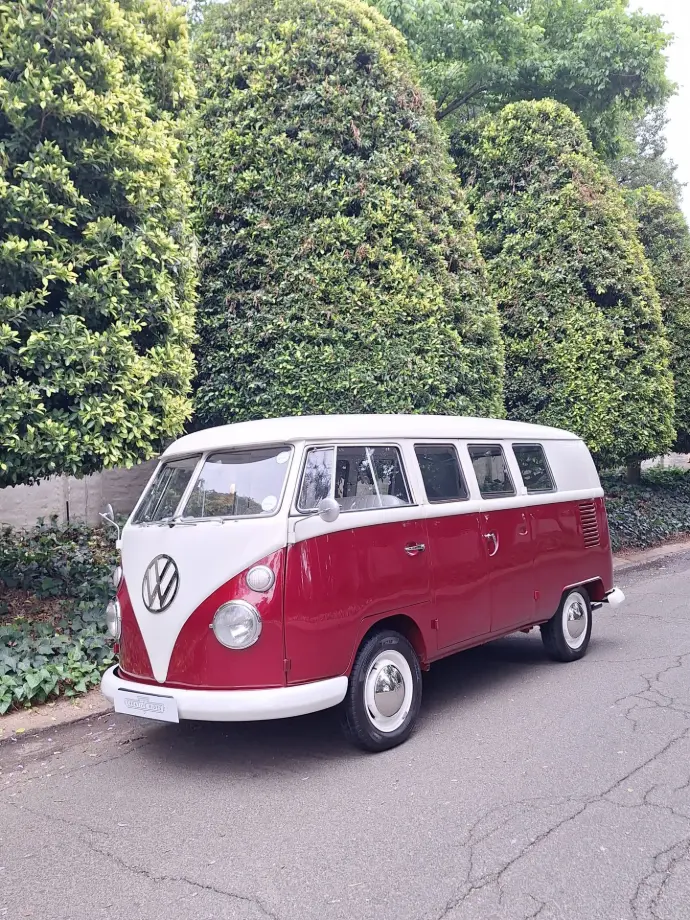
Volkswagen Kombi 1969
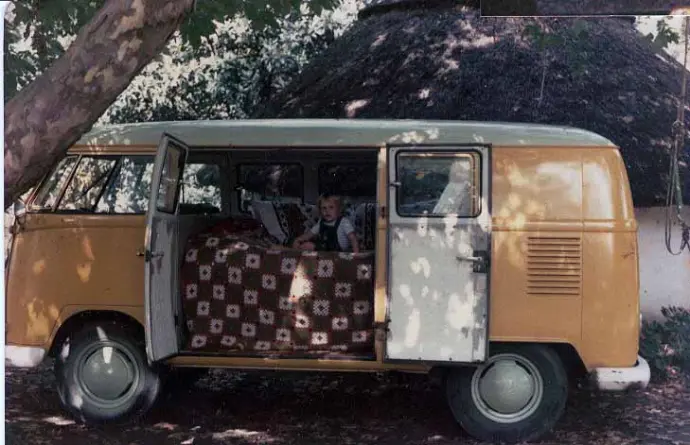
I was in White River, South Africa, in 1977 when a friend told me that there was a Kombi for sale for R600. And so I met the Bread Bin, a name some waggish pupils at my school promptly christened her when I returned to Durban.
The driving experience
The first challenge is to haul yourself up because the front seats are above the front wheels and there is no bonnet. Once your senses get used to the fact that you are sitting on a corner of the vehicle and you are moving in a really balanced and responsive manner you begin to really enjoy the experience. It goes willingly where you point it and does not sway at all. You also soon realise that the engine is far behind you and you will never be in danger of going too fast as a the engine at best can haul you up a hill at 60kph, having 40kW at its disposal. It was not a ball of fire, but I have nothing but respect for the genius of its design. The same engine powered the legendary Beetle and I got to know it intimately as I ended up with 4 different Beetles and another Kombi later on.
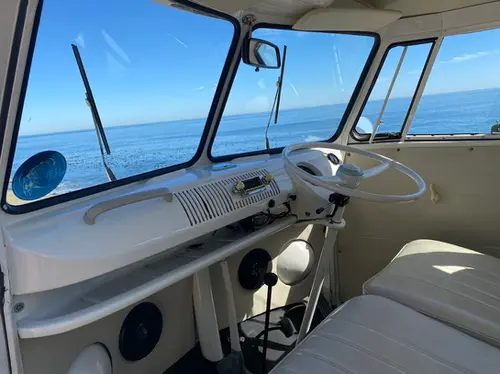
There is a spartan but durable ambience in the interior. There are two benches facing each other and a single fold-down seat on the right side. I soon realised that I could place a double-bed board and mattrass in the back across the benches and so there was an instant playground for the kids.
The driving experience
The picture to the right shows clearly the spartan but durable design of this iconic and beloved machine. The windows had a manual sliding mechanism and the wipers were inadequate, the headlights were feeble and yet you became fiercely loyal as the driving experience was honest and the loyal effort was tangible.
The Bread Bin had a couple of engine transplants but was a constant and reliable companion for nearly 10 years until I reluctantly sold it in 1984 when the rust bloomed at the back.
.
The engine
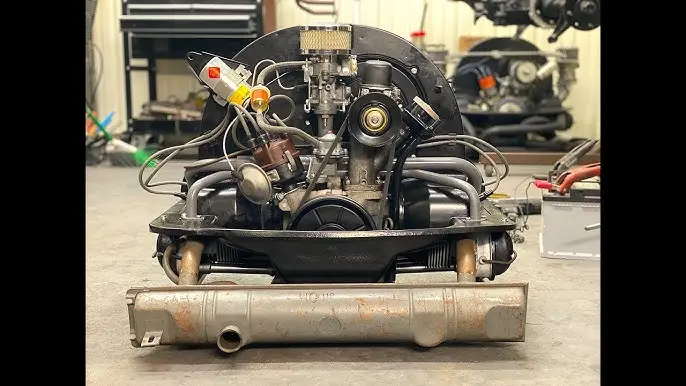
This picture from internet show the incredible design - this is the entire engine unit which was bolted to the gearbox with only four 17mm nuts. he entire unit could be balanced on a single point on the sump drainage point - so you could balance the whole engine on one point and then move the body away. I know as I removed the engine single-handed more than once. The only tricky part was not to balance the weight on the spigot of the transmission and the same applied when you put it all back.
Technical Specifications
- Engine: Air-cooled horizontally opposed (flat-four)
- Capacity: 1,584 cc
- Power: Approximately 37–40 kW
- Drive: Rear-wheel drive
- Transmission: 4-speed manual
- Top Speed: Around 105 km/h
- Cooling: Air-cooled (no radiator or coolant)
- Layout: Rear-mounted engine
Interesting Facts
- The split windscreen wasn't just a styling feature—it reflected the limitations of manufacturing curved glass in the early 1950s.
- The rear-mounted air-cooled engine gave excellent traction on loose roads and was remarkably simple to maintain.
- Much of the mechanical design was shared with the Volkswagen Beetle, making spare parts widely available throughout Southern Africa.
- The simple engineering meant many owners learned to service and repair them themselves with only basic tools.
Sign of the times
(Picture from the Web) It is no coincidence that the restless young people of the 70s decade seized on the Kombi as providing a mobility, a spirit of adventure and an affordable way to transport ad even house their family in the search for freedom.
Safety was not an overriding concern. I don't think the Bread Bin had safety belts and the kids used to romp in the back without a care. I never felt unsafe as it was such a stable vehicle and speed was definitely not an issue!
But the bread Bin proved to be a valiant and reliable companion for 10 years and I have very fond memories of her.